




Why Bitcoin Is Gaining Investor Attention
In the last decade, Bitcoin started as a niche experiment in digital money to become one of the most talked-about investments in the world. Its market capitalization being in the hundreds of billions and adopted more and more by individuals, companies, and even governments, Bitcoin is no longer just a speculative gamble — it’s emerging as a serious asset class.

Traditional markets now face inflation, geopolitical tensions, and low yields. That leads an increasing number of investors to explore the benefits of Bitcoin to strengthen their finances. This post will explain to you what makes Bitcoin unique, how it compares to other asset classes, and the strategies you can use to integrate it into a balanced portfolio.
Table of Contents
What Is an Asset Class — and Where Bitcoin Fits
An asset class represents a collection of investments that share common characteristics, including stocks, bonds, real estate, and commodities. Each asset class possesses unique risk profiles and return expectations and serves distinct functions in investment portfolios.
Bitcoin fits into a new category of digital assets, but its features make it unlike any other:
- Decentralization – No single government or central bank controls Bitcoin’s supply.
- Scarcity – Only 21 million bitcoins will ever exist, making it resistant to inflationary money printing.
- Transparency – All transactions exist on a public blockchain, which anyone can verify through verification processes.
- Portability – Bitcoin enables instant worldwide transactions without requiring any middlemen.
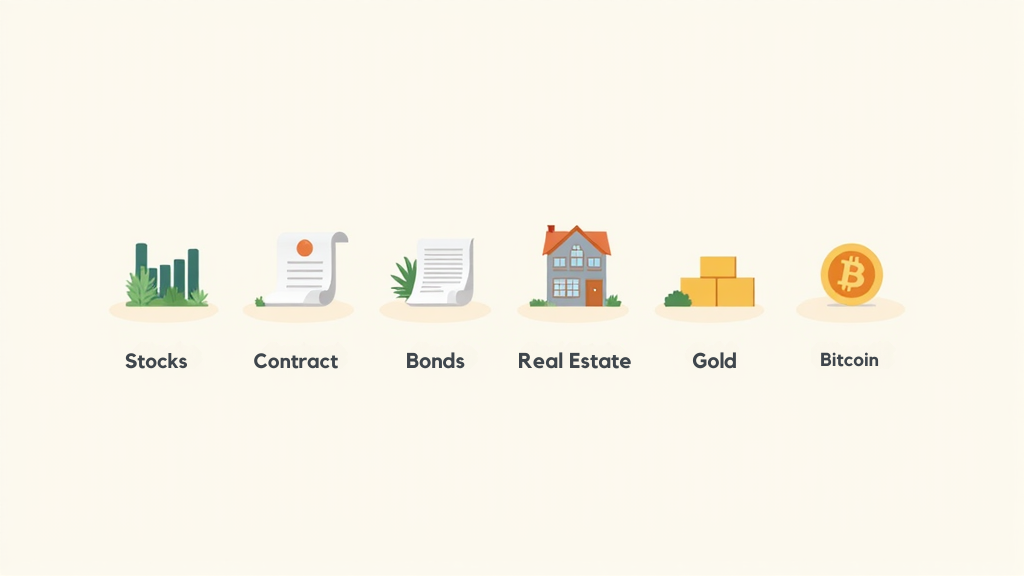
Bitcoin vs. Traditional Asset Classes
To understand the value of Bitcoin as an investment, it helps to compare it with the assets investors already know:
- Gold: Bitcoin is a store of value, just like Gold. Both are scarce and durable, but Bitcoin is far easier to store and transfer.
- Stocks: Stocks generate dividends and ownership rights, while Bitcoin does not. However, Bitcoin’s price appreciation potential has historically outpaced equities.
- Bonds: Bonds provide stability but low returns. Bitcoin is the opposite — volatile but with potential for outsized long-term growth.
The Benefits of Bitcoin
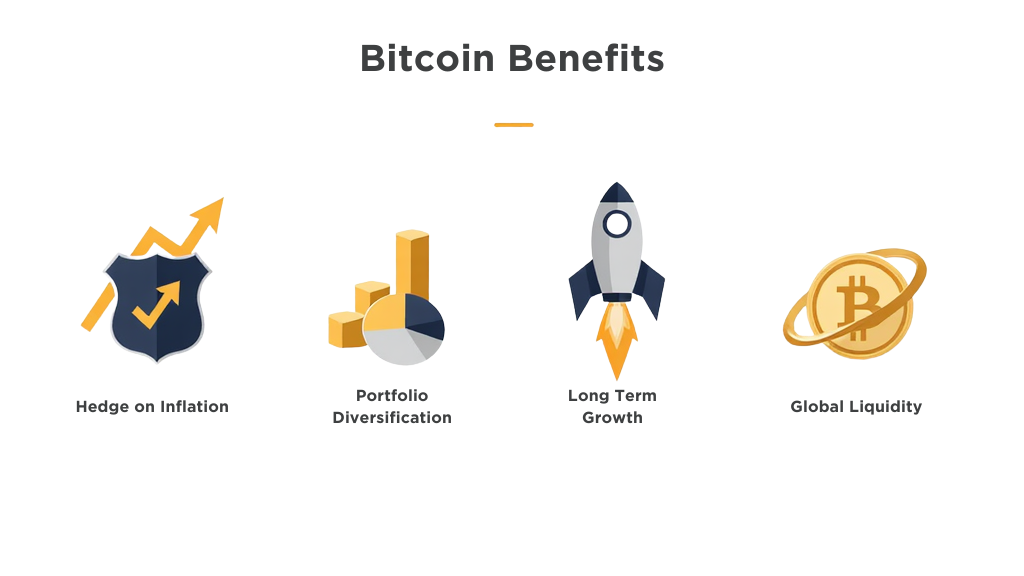
1. Hedge Against Inflation and Currency Depreciation
The main advantage of Bitcoin is its fixed supply. Central banks can print unlimited amounts of fiat currencies. Bitcoin has a maximum supply of 21 million, making Bitcoin an attractive option for people who want to protect their wealth from inflation and currency devaluation.
2. Portfolio Diversification
Adding Bitcoin to a traditional mix of stocks and bonds can improve risk-adjusted returns. Because Bitcoin’s price is not perfectly correlated with traditional assets, a small allocation can reduce overall volatility while enhancing long-term growth potential.
3. Long-Term Return Potential
Bitcoin stands as one of the most successful assets throughout the last ten years in historical terms. The past performance of Bitcoin does not ensure future success, but early investors who held onto their coins have experienced significant profits.
4. Global Liquidity and Accessibility
Bitcoin trades 24/7 on hundreds of exchanges worldwide. Unlike real estate or bonds, you don’t need to be a wealthy investor to start. You can even buy $10 worth of Bitcoin, giving anyone access to this asset class.
Risks of Bitcoin You Must Understand
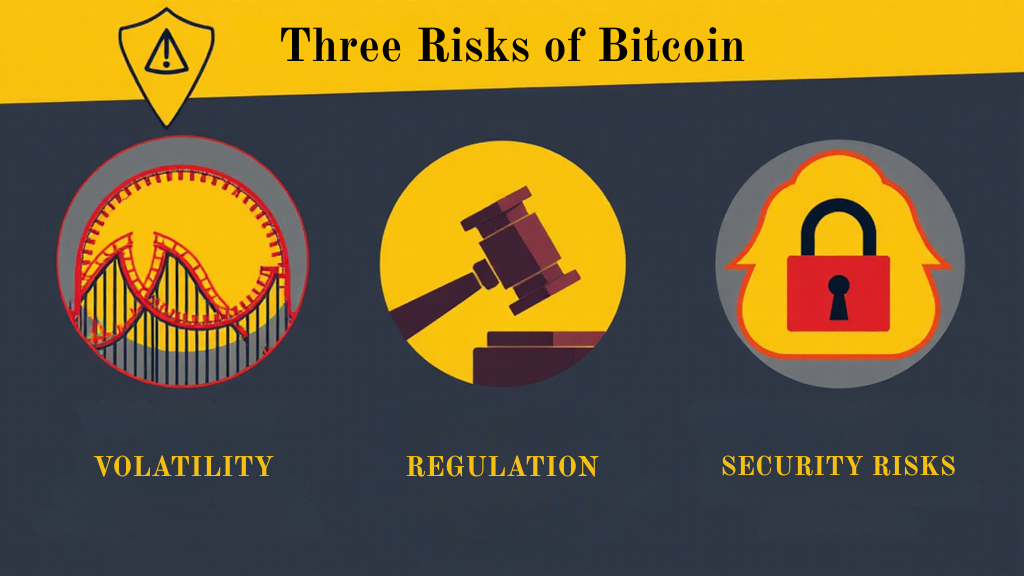
High Volatility
Bitcoin is famous for its price swings. It can lose or gain 20% in a single week. Investors must be prepared for volatility and avoid investing money they cannot afford to lose.
Regulatory and Taxation Risks
The worldwide governments continue to determine a proper classification and regulatory framework for Bitcoin. The future legal framework will determine Bitcoin usage, while current tax regulations force most investors to treat Bitcoin as a capital asset.
Security Risks
The Bitcoin wallet system operates without the customer support services that bank accounts typically provide. The permanent loss of your private keys (passwords) will result in the permanent loss of your coins. The use of secure hardware wallets together with proper security measures represents an essential requirement.
How to Integrate Bitcoin Into Your Financial Strategy
Determining Your Allocation
The experts suggest that you invest 1% to 5% of your portfolio in Bitcoin to capitalize on its potential growth while controlling the risk exposure. Your suitable investment amount depends on your financial objectives, as well as your risk tolerance and investment duration.
Using Dollar-Cost Averaging (DCA)
Investors who want to avoid market timing stress can use Dollar-Cost Averaging (DCA) by purchasing Bitcoin at fixed intervals (weekly or monthly) to reduce market volatility.
Choosing a Secure Exchange
Choose a trustworthy exchange that operates under regulations such as Coinbase, Kraken, or Binance (depending on your country). Choose platforms that have a good security record and are compliant with regulations.
Safeguarding Your Bitcoin
Hardware wallets Ledger and Trezor should be used for long-term storage. Advanced users who want to explore multi-signature wallets should note that these wallets require multiple approvals to move funds.
Case Study: Bitcoin in a Portfolio
Two investors have demonstrated their investment choices through their portfolios during the last five years.
Portfolio A: 60% stocks, 40% bonds
Portfolio B consists of 55% stocks, 40% bonds, and 5% Bitcoin investments.
The backtesting results indicate Portfolio B would have performed better than Portfolio A because of Bitcoin’s growth rate, despite experiencing higher volatility. A minimal investment in Bitcoin would produce substantial long-term effects.
Bitcoin as a Store of Value
Bitcoin is increasingly compared to gold because it functions as a store of value, meaning it maintains purchasing power over time. Unlike stocks or businesses, it doesn’t generate yield — it simply exists with desirable properties.
| Asset | Productive? | Scarce? | Portable? | Digital? |
|---|---|---|---|---|
| Gold | ❌ | ✅ | ⚠️ Limited | ❌ |
| Land | ⚠️ | ⚠️ | ❌ | ❌ |
| Bitcoin | ❌ | ✅ | ✅ | ✅ |
Bitcoin stands out as the digital version of gold: scarce, portable, globally accessible, and resistant to debasement.
Why Bitcoin Belongs in Modern Portfolios
Bitcoin is not just a speculative bet anymore. It’s becoming an established asset class with unique properties that complement traditional investments. The benefits of Bitcoin include:
- Diversification in a conventional portfolio
- Protection from inflation
- Long-term growth potential
- Global accessibility

Key Takeaways
- Start small — 1% to 5% allocation is often enough.
- Use secure storage and avoid emotional trading.
- Treat Bitcoin as long-term money, not a get-rich-quick scheme.
If you’re new to Bitcoin, start by educating yourself and making small investments. Over time, you’ll see why so many investors view it as the digital gold of the 21st century.
FAQs – Common Questions About Bitcoin
Q1: Is Bitcoin a Safe Haven Asset?
Bitcoin shares some traits with safe havens like gold, but its volatility means it’s not yet a perfect hedge. However, many investors use it as long-term protection against monetary debasement.
Q2: What Is the Value of a Bitcoin?
The worth of Bitcoin extends further than its monetary value in dollars. The value of Bitcoin stems from its limited supply, decentralized system, secure network, and worldwide market interest. The price of Bitcoin changes, but its core value exists in its distinct monetary characteristics.
Q3: Should I Include Bitcoin in My Retirement Portfolio?
Some retirement accounts and ETFs now allow Bitcoin exposure. A small allocation can boost diversification and long-term return potential, but investors should balance it with safer assets.
Q4: How Does Bitcoin Compare to Gold?
Both are scarce, durable and not tied to governments. Gold has 5,000 years of history, while Bitcoin has only 15 — but Bitcoin is more portable, divisible, and accessible.