



Ethereum Explained – Everything Beginners Need to Know
Bitcoin has become a well-known term among people: the digital gold, the pioneer of cryptocurrencies. The introduction of the word Ethereum creates confusion about whether we are discussing money, magic, or a science fiction world. Don’t worry—pull up a chair, grab your coffee, and let’s break it down in plain English. In the next few paragraphs, you will have Ethereum explained, so you will know how to describe what it is to whoever asks you.

Table of Contents
What is Ethereum?
Ethereum exists as a cryptocurrency system beyond its basic digital currency status. The cryptocurrency system of Ethereum functions as a complete application platform for crypto, similar to how Bitcoin operates as digital cash. Vitalik Buterin established Ethereum in 2015 when he was just 19 years old to create a programmable system. The platform allows users to develop applications on top of its functionality beyond basic digital coin transactions. Ethereum functions as an endless global computing system that operates continuously. The Ethereum platform operates as an open system that allows any developer to deploy applications without Apple or Google’s control.
How Does Ethereum Work?
The blockchain technology operates Bitcoin and Ethereum as two separate systems. The system functions as a digital ledger that records all transactions. The main difference between Ethereum and Bitcoin is that Ethereum functions as a program recorder instead of a number recorder.
The system executes smart contracts automatically when specific conditions become true. It operates without human intervention because it lacks both middlemen and bankers and it remains available seven days a week. Just code doing its job 24/7. That’s the magic of Ethereum.
Ethereum vs Bitcoin – The Key Differences
Here’s where people get tripped up. Bitcoin and Ethereum are cousins, not twins.
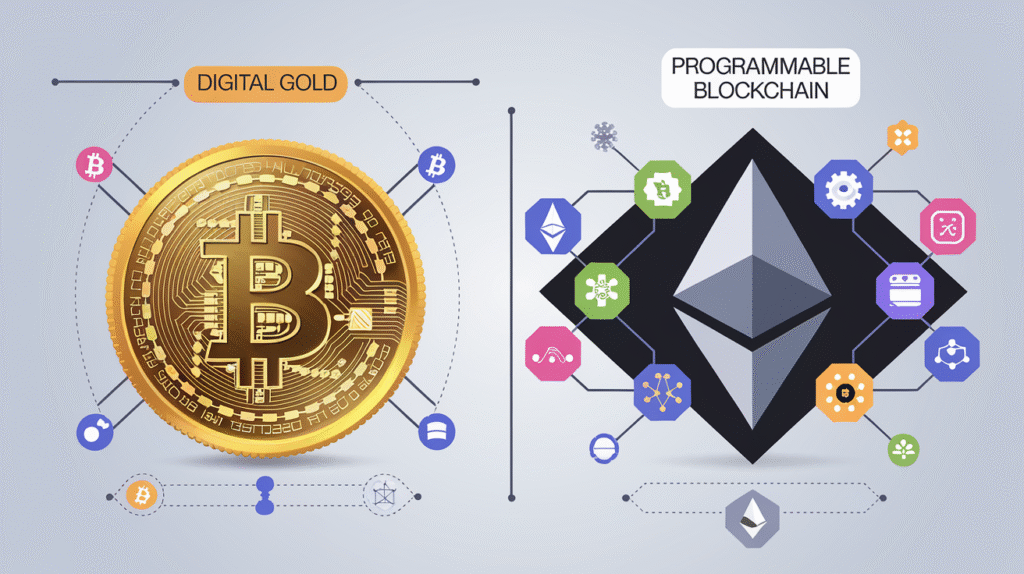
- Bitcoin = digital gold. It’s mainly about storing and transferring value.
- Ethereum = the world’s programmable blockchain.
Imagine Bitcoin as a calculator. Solid, reliable, does one thing well. Ethereum is like a smartphone—you can calculate, but you can also order pizza, post on Instagram, and binge Netflix.
Ethereum Explained: Smart Contracts
So, smart contracts. Sounds fancy, right? But really, it’s just a nerdy way of saying digital “if this, then that” agreements.
Example: You buy concert tickets online. Usually, there’s a company in the middle making sure you get your ticket. With Ethereum, the contract is programmed so that once your payment goes through, the ticket automatically lands in your wallet. No one can scam you, no one can back out.

It’s trust, but without the trust issues.
Smart contracts are already fueling DeFi (decentralized finance), where people lend, borrow, and earn interest without banks. They also power NFTs (digital art, collectibles, even virtual sneakers). And honestly? We’re just scratching the surface.
Ethereum Use Cases You Should Know About
Ethereum exists as a reality that permeates all aspects of life. DeFi applications function similarly to traditional savings accounts but operate without banking institutions. NFT marketplaces: Digital art selling for millions (remember Beeple’s $69M NFT?). Gaming: Players truly owning in-game assets, not just renting pixels. Big corporations: Even giants like Microsoft and JP Morgan are experimenting with Ethereum tech.

Understanding Ethereum Gas Fees
Ah, yes, the dreaded gas fees. If you’ve ever tried sending ETH during a busy day, you’ve probably cursed under your breath. The Ethereum network requires users to pay gas fees for network access. Network usage determines the amount of tolls that need to be paid. It’s like Uber prices during a rainstorm. The good news? Layer 2 solutions (like Arbitrum and Optimism) are working to make transactions cheaper and faster. So relief is on the way.

The Technology Behind Ethereum – The EVM
Behind the curtain is something called the Ethereum Virtual Machine (EVM). This is the engine that makes Ethereum tick. Every smart contract runs through the EVM, making the network a universal computer.
Here’s the kicker: other blockchains now try to be “EVM compatible” because Ethereum is the standard. That’s like saying everyone wants to build apps that work like iPhone apps.
Ethereum Staking Explained
The Ethereum network transitioned from mining operations similar to Bitcoin to staking which serves as an environmentally friendly alternative. The system operates through users locking their ETH to help protect the network instead of operating massive computer warehouses. In return, you earn rewards. Think of it like putting your ETH in a high-yield savings account, but you’re also helping run the system.

The Ethereum 2.0 Upgrade
You’ve probably heard whispers of Ethereum 2.0. In simple terms: it’s Ethereum on steroids.
- Faster transactions.
- Lower fees.
- More eco-friendly.
The move to Proof of Stake is already live, but more upgrades are coming that will make Ethereum scalable enough to handle millions of users without breaking a sweat.
Benefits and Risks of Ethereum
Let’s be real: Ethereum isn’t perfect.
Benefits:
- Hugely popular and trusted in crypto.
- Smart contracts and dApps have endless potential.
- Institutional adoption is growing.
Risks:
- The price of ETH can fluctuate drastically because it may decrease by 20% within a single day.
- The market faces competition from alternative blockchain networks including Solana and Cardano.
- The regulatory environment remains unclear because governments continue to understand this technology.
Ethereum presents itself as a valuable investment opportunity. Your tolerance for risk determines your answer.
The Future of Ethereum
Ethereum stands as the core foundation for Web3 and DeFi and the Metaverse if you believe in their future development. Hedge funds along with banks and corporations have already started investing in this space.
Developers are constantly building new apps. And Ethereum has something powerful that’s hard to beat: network effect.
It’s like Facebook in the early days—everyone’s on it, so it keeps growing.

Quick Recap…
Ethereum explained without the jargon overload. The core of Ethereum functions as a massive open platform that unites money with applications and code. Is it the perfect investment? No. Is it exciting, risky, and potentially revolutionary? Absolutely. So next time someone asks, “What’s Ethereum?” you won’t have to scratch your head. You’ll be the one saying, “Oh, it’s the internet’s programmable money machine.”
📌 FAQ – Ethereum Explained
What is Ethereum in simple terms?
Ethereum is a blockchain platform that enables users to build decentralized applications (dApps). Unlike Bitcoin, it’s not just digital money—it’s programmable.
How does Ethereum work?
Ethereum works through smart contracts—self-executing code that runs on the Ethereum Virtual Machine (EVM). This makes transactions automatic and secure.
What’s the difference between Ethereum and Bitcoin?
Bitcoin is digital gold, making it an excellent choice for storing value. Ethereum, on the other hand, is a programmable blockchain that powers DeFi, NFTs, and thousands of other applications.
What are Ethereum smart contracts explained simply?
They’re digital agreements that run automatically when conditions are met. For example, pay for a ticket, and the smart contract delivers it instantly.
What are the main Ethereum use cases?
Ethereum powers DeFi lending platforms, NFT marketplaces, blockchain games, and enterprise solutions. It’s the backbone of Web3 innovation.
Why are Ethereum gas fees so high?
Gas fees are the “toll” for using Ethereum’s network. Fees rise when traffic is heavy, but upgrades and Layer 2 solutions are helping lower costs.
What is Ethereum staking, explained for beginners?
Instead of mining, you can “stake” ETH by locking it into the network. In return, you earn rewards while helping secure the blockchain.
What is the Ethereum 2.0 upgrade about?
Ethereum 2.0 brings faster speeds, lower gas fees, and eco-friendly Proof of Stake. It’s the roadmap for scaling Ethereum to support millions of users.
Is Ethereum a safe investment?
Ethereum offers numerous benefits, including broad adoption and multiple use cases, but also faces risks such as volatility, regulatory challenges, and competition from other blockchains.
What is the future of Ethereum?
The future looks bright—Ethereum is set to play a leading role in Web3, DeFi, and the metaverse, with institutional adoption on the rise.